

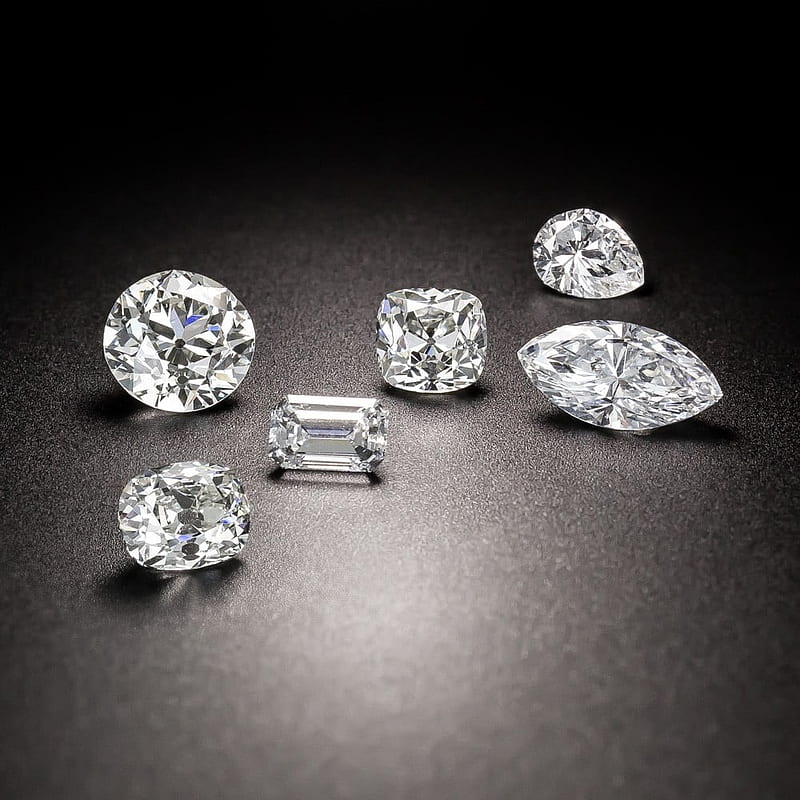
Natural Diamonds
Natural diamonds are one of Earth’s rarest and most captivating treasures. Their brilliance, endurance, and rich history make them the ultimate symbol of luxury and timeless elegance.
Main Features
Geological origins
Formed deep beneath the Earth’s surface over billions of years through extreme heat and pressure.
Unique characteristics
Each diamond possesses a one-of-a-kind structure, influencing its brilliance and fire.
Geological origins
Formed deep beneath the Earth’s surface over billions of years through extreme heat and pressure.
Geological origins
Formed deep beneath the Earth’s surface over billions of years through extreme heat and pressure.
Geological origins
Formed deep beneath the Earth’s surface over billions of years through extreme heat and pressure.
Manufacturing Process of Natural Diamonds
The journey of a diamond from deep within the Earth to a stunning gemstone.
Formation (Over millions of years)
Carbon Source
Natural diamonds are composed of carbon atoms. The primary source of carbon for diamonds comes from organic matter buried deep within the Earth.
High Pressure & Temperature
Diamonds form at depths of 140-190 km (87-118 miles) beneath the Earth’s surface under extreme pressure (45-60 kbar) and temperatures (900-1,300°C).
Crystal Growth
Under these conditions, carbon atoms bond in a crystal lattice structure, forming rough diamonds.
Transportation to the surface
Volcanic Eruptions (Kimberlite Pipes)
Diamonds reach the Earth’s surface through deep volcanic eruptions, which carry diamond-rich magma. This magma cools and solidifies into kimberlite pipes, which are the primary source of natural diamonds.
Diamond mining
Open-Pit Mining
When diamonds are located near the surface, large-scale open-pit mines are used to extract kimberlite ore.
Underground Mining
If diamonds are found deep underground, tunnels and shafts are created to extract the ore.
Alluvial Mining
In some cases, diamonds are transported by rivers and found in riverbeds, beaches, or ocean floors. These are extracted using alluvial mining techniques.
ORE processing & diamond extraction
Crushing & Screening
The mined kimberlite ore is crushed into smaller pieces.
Dense Media Separation (DMS)
This process uses liquids with a specific density to separate diamonds from other materials.
X-Ray Luminescence
Diamonds fluoresce under X-ray light, allowing them to be identified and separated.
Grease Tables
Since diamonds repel water but stick to grease, grease tables help in extracting them from the ore.
Sorting & classification
Size & Shape
Rough diamonds are sorted based on their carat weight, size, and shape.
Quality Grading
Diamonds are evaluated based on their clarity, color, and potential yield for cutting.
Cutting & polishing
Planning
Advanced imaging and laser scanning are used to determine the best way to cut a diamond for maximum brilliance.
Sawing
Diamonds are cut using high-precision lasers or diamond-bladed saws.
Polishing
Skilled artisans shape and polish the diamond facets to enhance its brilliance.
Final Grading
The polished diamond is graded based on the 4Cs (Carat, Cut, Clarity, Color) before being sent to the market.
jewellery manufacturing & market
Diamond Setting
Polished diamonds are set into jewellery, including rings, necklaces, earrings, and bracelets.
Retail & Sales
The final diamonds reach the global market, sold through jewelers, auctions, and luxury brands.